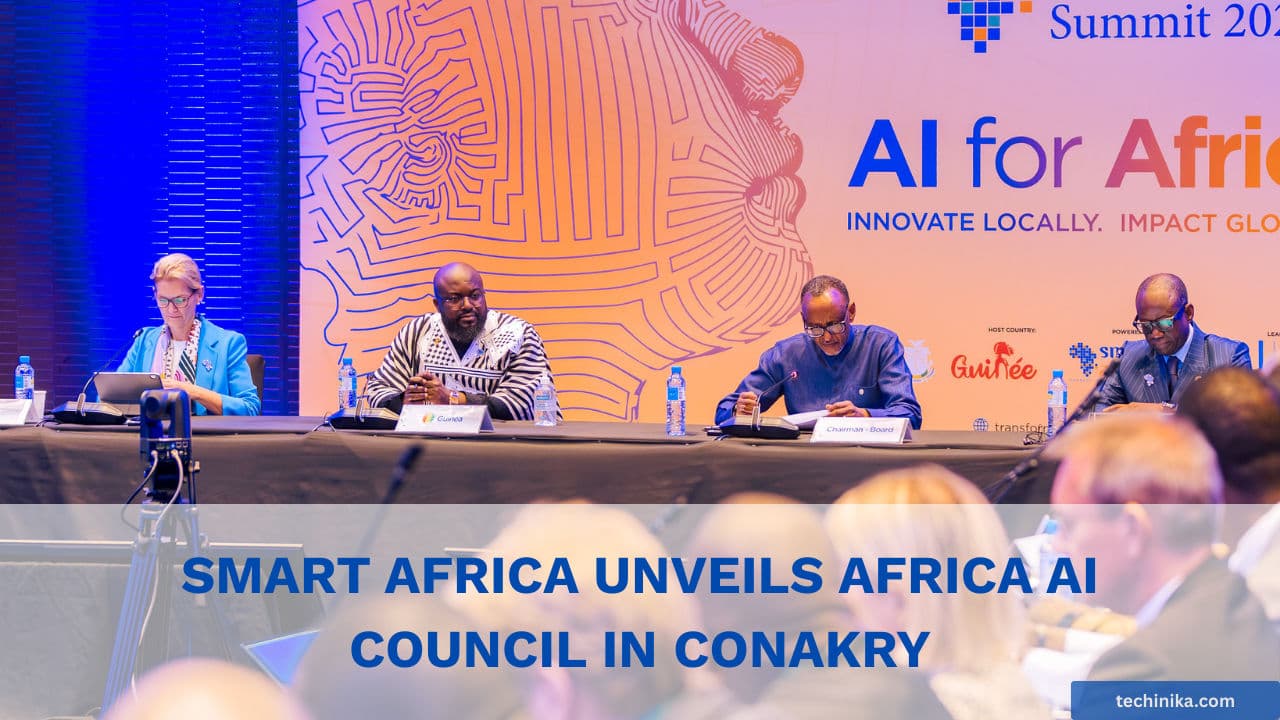
- The Smart Africa Board officially launched the 15-member Africa Artificial Intelligence Council in Conakry, Guinea, to lead the continent's AI transformation.
- Chaired by H.E. Paul Kagame, President of Rwanda, the Council aims to ensure Africa leads in the global AI revolution, focusing on African values and challenges.
- The Council's members were selected through a rigorous process involving Smart Africa, AUC, and ITU, ensuring balanced representation across government and independent experts.
- Its mandate is to coordinate efforts across six key pillars: Infrastructure, Data, Talent, Market, Investment, and Governance, to ensure responsible and beneficial AI adoption for Africans.
- The initiative emphasizes Africa's commitment to digital sovereignty, inclusive innovation, and sustainable economic growth by transforming the continent into an AI creator rather than just a consumer.
As of early 2026, the Africa AI Council is newly established, and its immediate focus is on developing strategic recommendations and coordinating efforts across its six priority areas to kickstart Africa's AI agenda.
In a landmark announcement made in Conakry, Guinea on November 17, 2025, the Smart Africa Board formally established the Africa Artificial Intelligence Council; a 15-member body tasked with leading the continent's AI transformation. Chaired by H.E. Paul Kagame, President of Rwanda and Chair of the Smart Africa Board, the initiative represents Africa's most ambitious effort to ensure the continent leads, rather than follows, in the global AI revolution.
"Our Board mandated us to ensure that Africa leads, not follows in the global AI transformation," declared Lacina Koné, Director General and CEO of Smart Africa. "With the establishment of the Africa AI Council, we take a decisive step toward shaping an AI-driven future rooted in African values, responsive to African challenges, and designed to unlock African potential. These 15 exceptional leaders bring the expertise, vision, and commitment needed to ensure that Africa becomes a creator, not merely a consumer, of AI technologies."
A Selection Process
The Council's formation followed months of extensive multi-stakeholder consultations and a continent-wide call for nominations that attracted more than 400 applications from 57 nationalities across government, academia, civil society, and industry. The selection process, led jointly by Smart Africa, the African Union Commission (AUC), and the International Telecommunications Union (ITU), ensured strong geographic balance and representation across six critical thematic areas: Infrastructure, Data, Market, Talent, Investment, and Governance.
This comprehensive approach reflects the Council's mandate to provide strategic, actionable recommendations that will propel Africa toward a future where AI is accessible to all, responsibly deployed, and genuinely benefits Africans, reinforcing the continent's commitment to digital sovereignty, inclusive innovation, and sustainable economic growth.
The 15-Member Africa AI Council
ICT Ministers (7 Members):
Independent Members (8 Members):
The Council includes eight independent members representing leading organizations in AI development, including the Bill & Melinda Gates Foundation, Orange, Microsoft, and Google, bringing private sector expertise and global technology leadership to complement government representation.
Six Pillars of Africa's AI Strategy
The Africa AI Council will coordinate continental efforts across six interconnected priority areas, each critical to ensuring AI serves African interests while positioning the continent as a competitive player in the global AI economy:
- Infrastructure: Data centers, cloud computing, high-performance computing (HPC), and connectivity; the physical foundation enabling AI development and deployment
- Data: Governance frameworks, dataset creation, data ethics, and quality standards ensuring African data remains sovereign while powering locally relevant AI solutions
- Talent: AI education, skills training, workforce development, and capacity building programs to create Africa's AI-ready workforce
- Market: AI commercialization, startup ecosystem development, business models, and market creation that turns AI innovation into economic opportunity
- Investment: Funding mechanisms, venture capital, development finance, and public-private partnerships mobilizing resources for AI initiatives
- Governance: Regulation, standards, policy frameworks, and ethical guidelines ensuring responsible AI adoption that protects citizens while enabling innovation
Strategic Context: Why Now?
The Council's establishment comes at a pivotal moment. Africa, home to the world's youngest and fastest-growing workforce, stands to benefit immensely from productivity gains offered by AI technologies. However, the continent faces significant challenges like inadequate digital infrastructure, limited skilled workforce, concerns over data privacy and sovereignty, and the risk of becoming merely consumers rather than creators of AI technologies.
The Africa AI Council addresses these challenges by establishing shared frameworks to attract investment, promote locally tailored solutions, and ensure ethical and inclusive AI adoption. By working closely with governments, educational institutions, and the private sector, the Council will advocate for AI curriculum development in universities, establish policy frameworks balancing innovation with responsible use, and accelerate digital infrastructure deployment.
Smart Africa's Foundation for AI Leadership
Founded in 2013, Smart Africa is a bold commitment by African Heads of State and Government to accelerate sustainable socio-economic development through ICTs and digital transformation. With 42 member states and over 50 private-sector and development partners, Smart Africa's vision is creating a single digital market for Africa that drives innovation, competitiveness, and inclusive growth.
Through initiatives like the Transform Africa Summit, Smart Africa Digital Academy, and the One Africa Network, the alliance has been instrumental in fostering partnerships and digital policies driving technological advancement. The Africa AI Council represents the natural evolution of this work; focusing specifically on AI as the key driver of the continent's next phase of digital innovation.
The unveiling during the Transform Africa Summit 2025 in Conakry was strategic. The Summit served as a platform for announcing major AI and digital public infrastructure initiatives supporting Africa's single digital market ambitions. Host nation Guinea announced its alignment with Smart Africa's continental digital agenda, commitments to expand broadband, build sovereign data centers, and link digital transformation to national development priorities.
The Summit also saw the unveiling of the Smart Africa Digital Xchange (SADX), a framework enabling cross-border digital identity verification for digital trade and services across Benin, Ghana, and Rwanda; demonstrating how AI governance connects to broader digital integration efforts.
As Africa positions itself in the global AI landscape, the Africa AI Council represents more than institutional architecture, it is a declaration of intent. The continent will not passively adopt AI technologies designed elsewhere. Instead, through coordinated leadership, strategic investment, and commitment to African values and priorities, the Council aims to ensure AI development aligns with Africa's unique needs and aspirations.
The 15 members face an enormous task of translating ambition into action, coordinating across diverse national contexts, mobilizing investment at scale, and ensuring AI benefits reach the continent's most marginalized communities. Their success will determine whether Africa's AI future is shaped by African voices or written by others. With representation spanning government, private sector, civil society, and academia, the Council has the breadth of expertise needed; now comes the implementation that turns vision into reality.
If you enjoyed this story, follow us on WhatsApp for daily tech updates. Have a story idea, partnership inquiry, or news tip? Write to editorial@techinika.com or visit our contact page.

Cishahayo Songa Achille
Chief EditorCishahayo Songa Achille is a Rwandan software engineer and tech entrepreneur focused on democratizing digital skills. He is best known as the Founder and Managing Director of Techinika, an edtech firm established in 2020 to make complex technological advances accessible to the general public.
Up Next
Rwanda and Kenya Sign Kigali Declaration to Allow Fintechs Operate Across Borders
By Mwiza Zamda · 2 min read
Reader Discussion
Comments(0)
No account needed — pick a display name to join.
No comments yet
Be the first reader to share your perspective on this story.