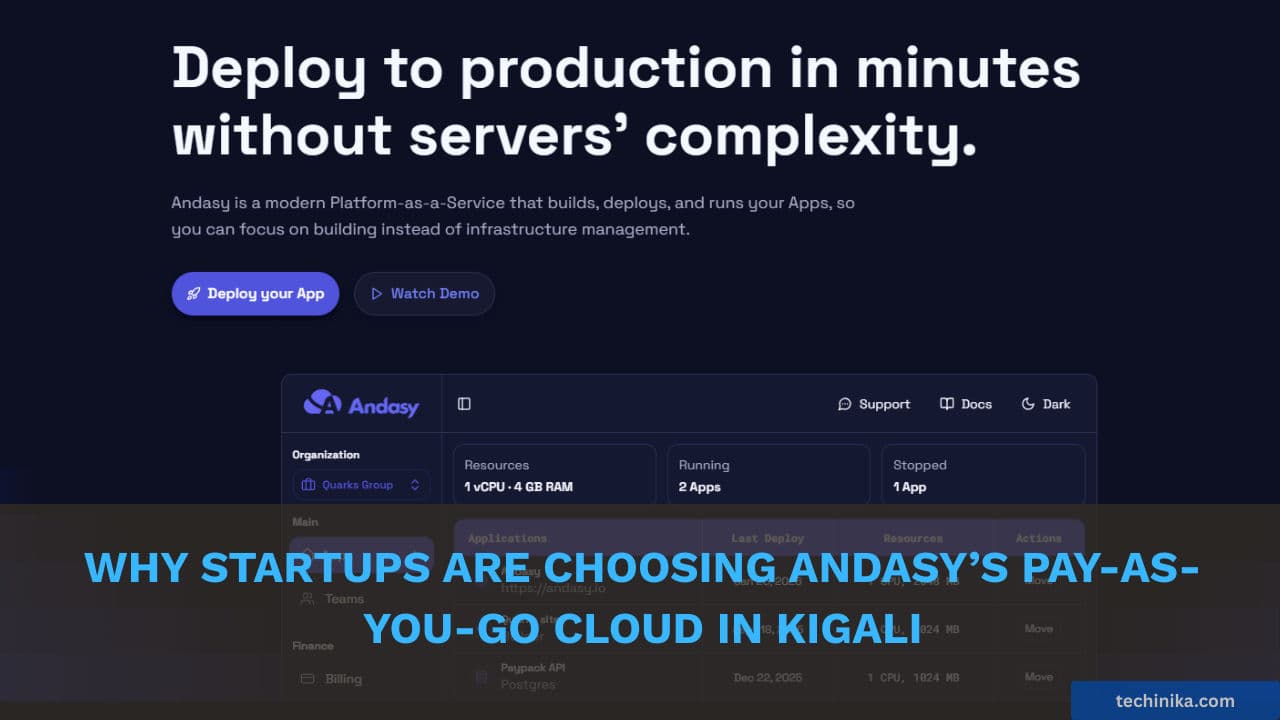
- Kigali-based cloud platform Andasy has launched its Rwanda Region, enabling businesses and developers to deploy applications on local infrastructure.
- The platform operates as a Platform-as-a-Service (PaaS), allowing developers to build and deploy applications without managing servers or operating systems.
- Andasy supports multiple programming languages and Docker, offering core features like 99.9% uptime, automatic SSL, DDoS protection, and 24/7 monitoring.
- Local deployment on Kigali-based servers helps reduce latency for Rwandan users and ensures compliance with the country’s data protection regulations.
- With a pay-as-you-go pricing model, Andasy aims to support startups and small teams, contributing to Rwanda's growing digital economy and cloud ecosystem.
No significant public updates regarding Andasy's operations were found after the article's publication date.
Kigali-based cloud platform Andasy has officially launched its Rwanda Region, enabling businesses and developers to deploy applications on infrastructure physically located within the country.
Rwanda already hosts several cloud and data infrastructure providers. Andasy now joins that growing ecosystem with its own locally hosted environment.
A Platform Built for Developers
Andasy operates as a Platform-as-a-Service (PaaS), meaning developers can build and deploy applications without managing servers, operating systems, or networking configurations.
The platform supports technologies such as Python, Node.js, Java, PHP, Ruby, and Go. Applications that run in Docker can be deployed on Andasy, with setup handled through a command-line interface.
Core features include:
- 99.9% uptime SLA
- Automatic SSL certificates
- DDoS protection
- 24/7 monitoring
- Encrypted environment variables
- Private networking via WireGuard
What the Rwanda Region Means
With the Rwanda Region now live, applications deployed on Andasy can run on Kigali-based servers. This can help reduce latency for local users and support compliance with Rwanda’s Data Protection and Privacy regulations.
The company also operates on a pay-as-you-go pricing model, aimed at startups and small teams that need flexible infrastructure costs.
Growing Rwanda’s Cloud Ecosystem
Rwanda’s digital economy continues to expand, with increasing demand for local hosting solutions from fintech platforms, e-commerce services, startups, and public institutions.
Andasy’s latest update adds another option for developers seeking locally hosted infrastructure. As more companies build digital products within the country, the availability of multiple cloud providers strengthens competition, resilience, and innovation in the ecosystem.
For more information, visit andasy.io
If you enjoyed this story, follow us on WhatsApp for daily tech updates. Have a story idea, partnership inquiry, or news tip? Write to editorial@techinika.com or visit our contact page.

ISHIMWE Jean Claude
AuthorA technology writer at Techinika, exploring digital innovation and emerging technology trends across Africa. Dedicated to translating complex ideas into meaningful narratives.
Up Next
How L-Guard is Re-Engineering Africa’s Road Safety Ecosystem
By Kellycie Bayingana · 5 min read
Reader Discussion
Comments(0)
No account needed — pick a display name to join.
No comments yet
Be the first reader to share your perspective on this story.